Tricycle is pleased to offer the Life As It Is podcast for free. If you would like to support this offering, please consider donating. Thank you!
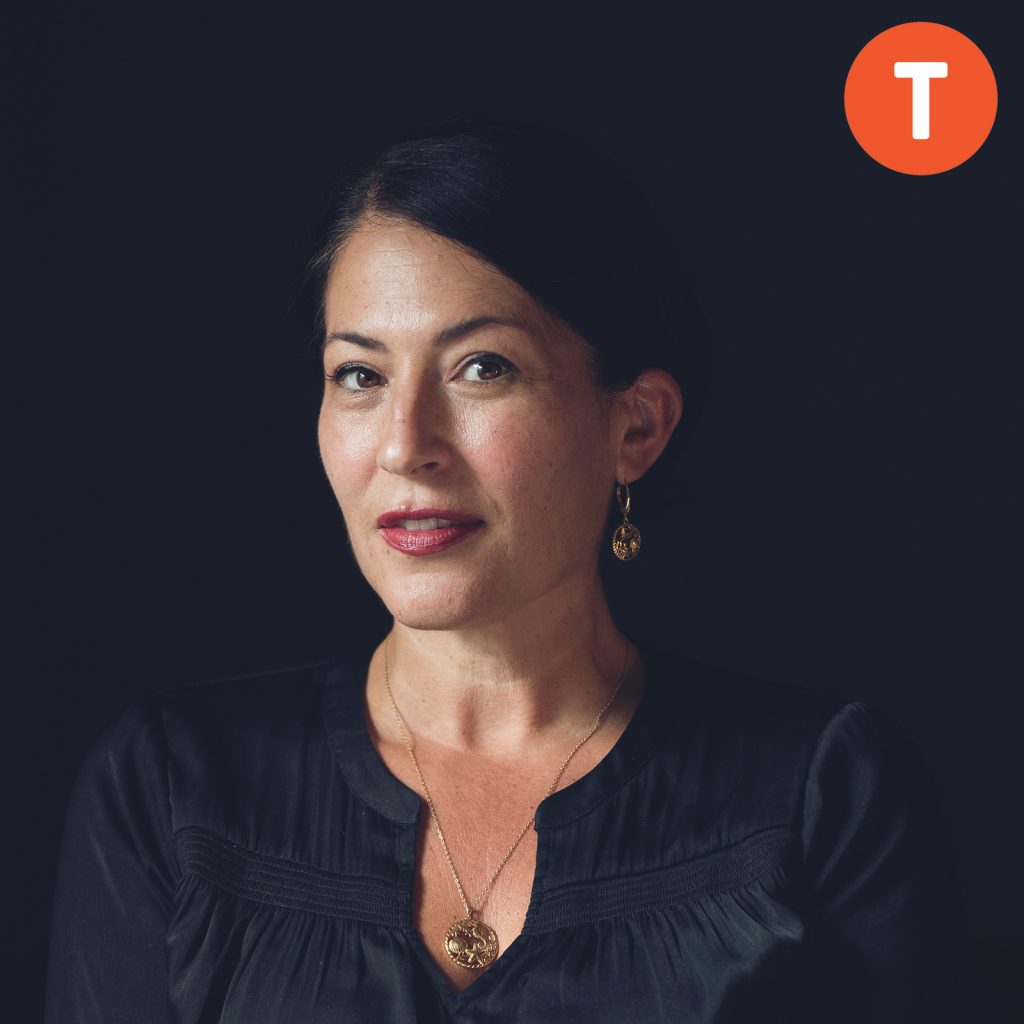
Ada Limón is the author of seven books of poetry, and she recently completed her term as the 24th Poet Laureate of the United States. During her tenure as Poet Laureate, Limón undertook a series of projects harnessing poetry to transform our relationship to the natural world, from installing poems on picnic benches in national parks across the country to engraving a poem on a spacecraft that is on its way to the second moon of Jupiter. In her new book, Against Breaking: On the Power of Poetry, she draws from her experience as Poet Laureate to argue that poetry can be a powerful force for healing, connection, and courage.
In this episode of Life As It Is, Tricycle’s editor-in-chief, James Shaheen, and meditation teacher Sharon Salzberg sit down with Limón to discuss why she views poetry as a sacred language, how poetry can help us move through the world with courage and equanimity, what it means for poetry to exist in the questions, and how reading and writing poetry can help us imagine a different type of future.
Life As It Is is a podcast series that features Buddhist practitioners speaking about their everyday lives. You can listen to more of Life As It Is on Spotify, Apple Podcasts, and iHeartRadio.
♦
We’d love to hear your thoughts about our podcast. Write us at feedback@tricycle.org.
Ada Limón: My grandmother and my grandfather on my mother’s side were married for seventy-six years, and they met in a one-room schoolhouse in first grade. And when he passed away, we were sitting, she was in an assisted living facility where they had been living together, and she leaned in at the end of the day and said, “Now teach me poetry.” And I remember thinking, oh, she needs a language for this. She needs a language for this. And we talked about it a lot, and it was a really beautiful experience. And in a way it reminded me, of course, that poetry is a way of trying to make music out of the unspeakable, out of what we believe is the unsayable, and then we say it. James Shaheen: Hello, I’m James Shaheen, and this is Life As It Is. I’m here with my co-host Sharon Salzberg, and you just heard Ada Limón. Ada is the twenty-fourth Poet Laureate of the United States and the author of seven books of poetry. Her new book, Against Breaking: On the Power of Poetry, argues that poetry can be a powerful force for healing, connection, and courage. In our conversation with Ada, we talk about why she views poetry as a sacred language, how poetry can help us move through the world with courage and equanimity, what it means for poetry to exist in the questions, and how reading and writing poetry can help us imagine a different type of future. So here’s our conversation with Ada Limón. James Shaheen: OK, I’m here with poet Ada Limón and my co-host Sharon Salzberg. Hi Ada. Hi, Sharon. It’s great to be with you both. Ada Limón: Hello. Sharon Salzberg: Hi there. James Shaheen: So Ada, I think this might be the third time you’re on the podcast, I’m not sure, but you’re definitely one of the veterans. Ada Limón: I’m lucky. James Shaheen: Yeah, well, we’re lucky. And we’re here to talk about your new book, Against Breaking: On the Power of Poetry. So you describe the book and your work as Poet Laureate as making a case for poetry. So can you tell us a bit about the book and your case for poetry? Ada Limón: Yeah. You know, this is a book that came out of my final talk when I was serving as the 24th Poet Laureate of the United States. I was asked to give a closing reading, and initially I had some other ideas about what the reading might be and then I thought, you know, it’s gonna be a talk. And it seemed like a time where we needed to make a case for the arts, make a case for libraries, make a case for reading, make a case for poetry, for humanity. And so I set out to give a final speech in that role that would be galvanizing and that would really, in many ways, point to the power of language to heal us collectively and heal us privately. After I gave the speech, the publisher for Scribner, Kathy, was there and came up and said, “Would you be interested in doing an expanded version of it so that we could make a book out of it?” And I was so excited to have it come to life in a new way and hopefully reach a broader audience so that if you weren’t in the room that day as I gave the speech, you can feel like you are in the room as you read the book. James Shaheen: Yeah. That’s nice. I’m glad that they had that idea to make it a book. It certainly reached a broader audience, including us. So as part of your work making a case for poetry, you created a number of big national projects, including sending a poem out into space and bringing poetry into national parks around the country. So briefly, could you tell us about some of the most powerful moments from your tenure as Poet Laureate? Ada Limón: Yeah. One of the first things that I was asked to do was to make a poem that would be engraved on the spacecraft the Europa Clipper that was launched into space on October 14th, 2024, that is going to the second moon of Jupiter called Europa, which is an icy moon that they believe might have all the ingredients for life. And the ask was, “Would you write a poem that would go on the spacecraft?” What I didn’t know then was that it was going to be engraved in my own handwriting. And so it’s on the spacecraft now launched into space, and it’s engraved on the vault plate, which I love to think about because the vault plate protects all the sensitive instruments, and I think about poetry as protection, that it’s sort of out there protecting all the sensitive scientific instruments that are meant to actually test the water and to see if this moon has all of the ingredients for life. James Shaheen: Just out of curiosity, is it expected to actually land on Europa? Ada Limón: It won’t actually land, it’ll go into orbit. And so I think it’s gonna be another four years before we start to see some images and some results from the mission. James Shaheen: Well, that poem will have to be a little bit patient too then. Ada Limón: Yeah, poetry is nothing if not patient. James Shaheen: So go on, I interrupted you. Ada Limón: Oh no, not at all. But, you know, I was asked to do that project, which was really wonderful, and getting to know all the NASA scientists was really remarkable. But I will say that even if you are in a room full of people who are interested in space, every NASA scientist will tell you this. This planet, this one we’re on, this is the best one. And so the heart of my signature project was a project called You Are Here, which was putting poems in the seven different regions of the national park and creating an anthology called You Are Here: Poetry in the Natural World. And those were meant to be poems that really responded to not just the planet but the planetary crisis, and also not just the planet on a large psychological, theoretical level but in a very much “This is the earth I stand on” way. So those were the two real big highlights of my life in the last three years of serving in that term, or serving in that role, and so it’s been really remarkable to reflect as this book comes out, you know, about everything that we accomplished and also watching everything change. And that’s been really difficult too. James Shaheen: Yeah, I agree that this is the best planet. I’m probably a little biased, but I still especially like the idea of that poem on its way to Europa. Sharon? Sharon Salzberg: So you start the book by saying that anytime you begin to write anything these days, you ask yourself a question. So can you tell us about the question? How does it guide you? Ada Limón: Yeah. You know, the question is whether or not what I want to make is if I want to break something or do, the way it starts is “Any time I begin to write anything these days, my whole life flashes before my eyes. I ask myself, Do I want to break something, or do I want to mend something?” And I think that a lot of my life has felt that way, whether or not I’m actually trying to weave together something or sew together something, transform something out of pain, make something out of wonder, or if I’m actually trying to break it open, trying to shove up against it, trying to rattle its cage. And sometimes those things work in tandem, and sometimes they’re at odds. Sharon Salzberg: That’s kind of amazing. You note that when clarity and truth are hard to come by, you put your faith in poetry. So what does that faith look like? And how does it guide you through tumultuous and difficult times? Ada Limón: You know, I think that it looks in many ways like curiosity. It looks like wonder. It looks like strangeness. Even now, even this morning, I had a moment where I was sort of thinking about the hardness of this world right now and what I could offer against it, and I just kept thinking, you know, we don’t know how this ends. We don’t know. There’s still mystery, and we don’t know. We don’t know what’s coming, and I’m leaving myself open for all sorts of possibilities and imagination. And poetry allows for that. It allows for those sorts of windows where you can give in to mystery. We love clarity and I love answers, but the art that I make doesn’t exist in the answers. It exists in the questions, and that’s where I feel most alive. And I think that it seems, to me at least, you know, I’ll be 50 in the next month, and I keep thinking the questions just keep getting bigger. I keep knowing less and less, and so I’m surrendering to that in a lot of ways. And I think poetry is the venue for unraveling things as opposed to a sort of cold certainty that can feel very closed off. And in either way, whether it’s despair or hope, it can feel so closed, right? And wonder is open; poetry is open. James Shaheen: Well, I wish I were turning 50 next month, but that has long passed. Sharon Salzberg: Well, I was also thinking, I have a retreat center I cofounded which just turned 50, so I know exactly what fifty years feels like. Ada Limón: It is a pretty interesting milestone. I keep thinking so many thoughts, and it’s fascinating to me. Sharon Salzberg: Oh, maybe this connects to your sense of curiosity, but one of the comments people make about the retreat center, the Insight Meditation Society, or IMS, as we call it, they say the thing that’s really astonishing is that it grew and it flourished and it continues on without any adult supervision whatsoever. So I don’t if you feel that way about a life. Ada Limón: I kind of love that. I love that. James Shaheen: Yeah. Congratulations Sharon, by the way, on 50. Ada Limón: Yeah. That’s a beautiful thing. I like that we share that. James Shaheen: So, Ada, you point out that poetry can sometimes be dismissed as a selfish act of navel gazing, idle navel gazing, I should say—and, you know, that’s very close to the misinformed critique of meditation, by the way—and you write that it’s easy to shrug and think a poem can do nothing against the powerful chaos that’s building around us, but in your tenure as Poet Laureate, you witnessed how poetry can serve as a lifeline. So can you tell us about that? Ada Limón: Yeah. You know, I think that it’s very easy to feel, like any artist, “Oh, what’s the point of this? You know, shouldn’t I be out there doing something that feels like I’m contributing to society as opposed to this moment where I’m thinking, What’s a good word for this feeling?” And I think that there is power in figuring out that good word for that feeling, and the power is that you get to name and identify yourself. You get to think, oh, this is who I am, this is what I’m capable of, this is what I’ve gone through. And in that, you get grounded, you get more courageous, you get more powerful. And I feel like that’s something that we don’t consider often when we think about making art or someone who’s an artist, that they’re also gathering strength and they’re giving people strength. And I think about the times when I can’t figure out what’s wrong, but I need to shake up my system, and you guys know I meditate every day and I do lots of meditation, but sometimes I just need to turn on music really loud and dance around and sing along. And then I think, wow, that person made that song. You know, it could be a song that was made seventy years ago and it’s still moving through my body and changing the way I react and relate to the world. And so I think that oftentimes we have to remind ourselves as poets and even people who don’t consider themselves poets, that taking time out to name and identify how you’re feeling, what you’re seeing around you, telling yourself that you are in relationship with the world, reminding yourself that you’re in a relationship with the world is really valuable, and I think it might be more valuable than ever right now. James Shaheen: You know, I often think of poetry, I read poetry, but I think it’s so pushed to the margins that I was surprised to hear during your travels as Poet Laureate that you’ve seen that poetry is alive in every community. That was surprising to hear. And often you found yourself receiving more than you were offering. So what did you learn from the people you visited around the country? Ada Limón: Yeah. I love that you bring that up because I think that’s something that a lot of people have is that feeling like, “Oh, we’re the only one that does this thing.” I’m sure you guys feel this, right? I mean, you’re like, “Oh, this is our community and this is what we’ve created.” But then you meet people everywhere, like, “Oh, this is their practice, and oh, their practice is happening here and this is a community over here.” And so I kept feeling like I’m supposed to go out into the world and tell people what poetry is and talk about poetry. But in reality I really just listened. And they’d be like, “Oh, we have this school program where we teach kids to write a line of poetry and then they offer them to trees,” and, “Oh, we do this thing,” and I just got to receive. It was like the good news of the world, and it felt so beautiful, and I kept thinking, these are the things that we never see in the news. They never make a headline. Maybe they make a little headline in the local paper, right? But I got to receive the news that all of these people in the world are making things and trying to make things better. And that was surprisingly soul-nourishing for me in a way that I didn’t expect. And it also changed my relationship to the work I do, which was, oh, you’re not just supposed to go insert yourself into the world. You’re supposed to go into the world and be receptive to it and see what happens. All of this is a conversation, whether it’s with plants and animals or human beings. But that was a lesson, and I much more prefer to be in the seat of the learner and the student than in the seat of the teacher. So for me, that was a good place to be. James Shaheen: Right. You mentioned how happy you were to find so many others who shared your love of poetry or who were practicing poetry themselves, and you say that if we’re lucky enough to live a life in poetry, we are never alone—we’re surrounded by everyone else who has ever written. So how can poetry foster this sense of connection across time and space, or even to Europa? Ada Limón: Yeah, I love that because for me, it really does feel like right now, for example, and for those listening, you can’t see me, but I am in a room full of books, and I can pick up one of these books, and I know that they will be lines in there that I feel like I’ve written, or, oh, I know this, I know this in my heart, I know this feeling. And that is such a deep way of feeling connected, you know, because you can pick up any book and think, “Oh, this person had the same thoughts as I did.” I remember thinking it was strange that people would say, “Oh, I don’t have anything to write about because someone has already written about that.” I would say, “Well, of course we’ve all written and said things, and this is all part of the same conversation, right?” How many people have sat down and thought, “I want to make something or write something about the fact that all human beings die”? OK, well, that’s just about every poem. That’s about every poem is thinking about the finality of this experience, of this body. So I think that there’s a freedom in that, and that feels like community right there. Oh, I am in community with Emily Dickinson. I’m in community with Walt Whitman, with Alejandra Pizarnik in Argentina. And I think that there’s something about that that feels expansive in a way that answers the isolation of making art sometimes. Sharon Salzberg: One of the lines of poetry that you come back to again and again is from the poet Stanley Kunitz: “In a murderous time, the heart breaks and breaks, and lives by breaking.” Can you tell us about those lines and how poetry helps the heart live by breaking? Ada Limón: Yeah, I think about those lines all the time. I got to meet him a couple of times. I got to meet him on, I think it was his hundredth birthday. But I think about that poem because it feels like, oh, this is what this is. It feels like there have always been really astoundingly difficult times, and that no matter who we are, no matter how much money we have, we are not safe from our own mortality. And so our heart is always breaking because we will lose everyone that we love and eventually ourselves. And so the way that our heart works is to break and break open and to break and break open. And so I always imagine it’s just getting bigger and bigger. Every time it breaks, it just kind of gets bigger and bigger. I hold those lines in my heart a lot, because I feel like it’s easy to think, “Oh, this breaks my heart, and therefore I can’t go on.” But instead you realize, oh no, that’s how all hearts work, that we break and continue. Sharon Salzberg: You also say that poetry helps us open to our feelings, and this can help us move through the world with more equanimity and courage. So I’m really fascinated by your take on the connection between feelings and equanimity and courage. Ada Limón: You know, I think a lot about how numb everyone has become and how easy it is to find a way to numb yourself these days. And I can easily be persuaded into sitting and staring at my phone, and I actually say this thing to myself. I go, “Oh, what a waste of your beautiful brain.” That’s what I say when I try to break my habit of staring at the phone: “Oh, you wasted your beautiful brain.” And so I think that instead of numbing, we need to access our feelings and start to think about it and start to be like, “What is it that’s happening to me? What is it? Oh, I’m really sad. Oh, I am rageful.” And then what happens when you think outwardly and you think, “OK, what can I do about that?” You might make a poem, you might make art. You also might go and call your representative. You might go clean up the creek bed. You might take action. I think that those two things are connected because you are witnessing your own relationship and your own feelings, and then you think, OK, here we go. Because once you recognize that, you realize that you’re not the only one that’s feeling this way. Everybody’s feeling this. So many people are feeling this way. And then you’re not even alone in that feeling. So it feels like, oh, OK, this is part of this larger spaciousness of everything around us, and how do I take hold of it? Sometimes you’re dissolving it, and sometimes you’re like, I’m gonna use this for the greater good. Sharon Salzberg: You write that poets must surrender to the mess of the world and the mess of themselves, or ourselves. So can you say more about the role of surrender here? Ada Limón: Yeah. There’s a great quote by C. D. Wright that says that the goal is not to make a story but to experience the whole mess. And I think about that all the time because my brain wants to make a story, and it wants to make it real tidy, and then I meet the person I made that story about where they are, and they go, “Oh, this is who I am,” and I go, “Oh, that’s not the story I made up.” So I think that I’m constantly teaching myself to surrender to that idea of unknowing and that idea that there might be something else, and every time we try to box someone into some kind of container, something that’s easy and neat and safe or easy and neat and scary, it’s never true. And I think as artists and as human beings, we have to realize that the tidier the narrative, the more likely it is to be false. And so I think we have to keep opening ourselves up to that it’s not neat, that it is messy, and that’s OK. You know, I know that you feel this way because of what you guys have created, but I think that feeling a sense of community with fellow artists or feeling, whether it’s going to a concert or whether it’s going to a food drive or however it is that you meet your community, there can be this idea of not only am I not alone, but there is a lot of power here and we’re not always witness to it, and it’s not always the main narrative in the way we consume our media. And so I think that oftentimes poetry is a place you can go to feel like, oh, this is where I can recognize what we’re capable of, also be reminded of goodness, reminded of power, because I think right now it just feels like we’re in a cycle of negativity, and it feels so intense. And I don’t think it’s something that we’re going to be saved by thinking, and I don’t think we’re going to be saved by technology. Certainly not. In fact, maybe quite the opposite. But instead, we are going to be saved by imagination and courage and collective gathering and action. And I feel like that’s something that we really have to remember. So for me, I think that poetry is a place where, whether you’re making it or reading it, you get to be reminded that you have a stake, that you have a voice in this world, and that is really powerful. It’s really valuable. And it’s needed. And it’s not to be dismissed because I think it’s very easy for all of us to think, “Well, what does it matter? Everything is so hard. What does it matter if I show up? What would it matter if I did this one thing?” Well, if enough people do one thing, that’s collective change right there. James Shaheen: Ada, just listening to you, I thought of two words that jumped out at me again and again reading this, and one was attention and the other was courage, and you’ve talked about both. And with regard to looking at your phone and saying, “What am I doing with my mind?” You say we cannot rise to our full power if we are not paying attention to what we give our attention to. So I found that very helpful and consistent with Buddhist teachings. And you also say about courage, “Perhaps in dire and dangerous times like these, all poetry can do is remind us of where courage comes from. And if that’s the case, maybe that’s enough.” And I think it’s more than enough. I do get courage from poetry, and I also get courage from watching people in Minneapolis, and that’s more than one person doing something. It’s a lot of people doing it. So I really appreciated that. You point out that another power of poetry is its ability to make room for difference. How so? Ada Limón: You know, I think that when I was talking about poetry making you feel like you’re part of a community or part of a legacy or connected to everyone who’s ever written a poem, the other thing that you will experience, if you do spend time with poetry even your own poetry, you’ll recognize how vastly different our brains are. And you know, we’re just learning so much about our brains, and I think about, you know, even now I meet my friends and I think, “Hey, when I say ‘apple,’ do you visualize an apple, or do you think of the word apple?” because I’m so fascinated by the fact that our brains are so different. I think about dreams. You know, my dreams are technicolor and wild and really extreme, and then my husband’s are always sort of vague and washy and much more black and white. And so I think that one of the things I find so fascinating is that our brains are so different, and we’re made so differently. And yet poetry is the way that you get to witness the way someone else’s brain works. It’s not just the way the breath works, which is the line and the caesura and the stanza break. That’s also there. So it’s the intimate breath work, but it’s also how that person’s brain and heart work. And that to me is such a beautiful way of getting to know someone that might be different from you. James Shaheen: Yeah, you capture that when you write, “We can inhabit each other’s lives just by reading a poem aloud. It’s this intimacy that prevents us from being alone.” So explain how that works. Ada Limón: Yeah. I think that it was Robert Hass that was talking about how when you enter someone else’s poem, you enter their breath, and it’s very intimate, and I think that’s true. So there’s a level in which if I’m sitting alone and I read a poem and I’m reading it out loud, or I’m reading it in a room, we’re all experiencing this thing, which is getting to know this person’s blood, their pulse, all of the archives of their human experience with rhythm and sound. You know, when I write a poem, I am also processing all the poems I have ever read, or sometimes the Sade song that I love. You know, whatever it is, it’s coming through me. And so the rhythm of my body in my blood and my breath is making a poem. And then when we read that together, you’re experiencing all of that at once. And that to me is a really remarkable way of connecting. James Shaheen: Thank you. You also mentioned that poetry can remind us that language can have power, and you describe it as a sacred language of sorts. So what does it mean for poetry to be a sacred language? Ada Limón: Yeah. You know, I think about how when we think about religious texts or we think about spending time in church and hearing any kind of language that feels exalted, and poetry is exalted language, but it’s secular. And so it’s this beautiful, I mean, it has this beautiful way of becoming sacred without the religious connotations, which I find so beautiful because you don’t have to be in one realm or another in order to appreciate that power. And that to me is really important. I also think about it as music, that it can have those kinds of rhythms built into it. It can have that repetition, it can have the incantatory response and reflections that move into this way that almost feels like spells, or spell work. And I think that’s really powerful. So for me, it’s just so different than you think about rhetoric or prose or simply speechmaking, where that can be powerful. But usually when we hear a good speech, what do we say? It was so poetic. So poetry has that answer sometimes of the language that we need when we’re finding that difficulty in seeing through some of the rhetoric that we hear these days. James Shaheen: Well, speaking of the rhetoric that we hear nowadays, we recently had the poet Li-Young Lee on the podcast, and he described poetry as a way of rescuing language from debasement. I wonder if this resonates with you and how you think about poetry in a world where language feels like it’s losing its meaning or has been, well, debased. Ada Limón: Yeah, I think that’s very true. I think that we can use language as a blunt tool for violence. We can use it in a way that is meant for trickery and lies and turning people against each other. But poetry keeps bringing it back to the land of the soul, to the land of empathy, to the land of a collective need for beauty and belief in beauty. I think that is so essential because not only do we have to rescue language, but in rescuing language, we rescue ourselves. James Shaheen: That’s so nicely put. You mentioned earlier that poetry exists in the questions and holds no answers, and yet at the same time, it can itself be an answer. Can you say something about that paradox? Ada Limón: Yeah. You know, when I talk about questions, I’ll say, oh, yeah, you know, it exists in the questions. But I will admit, I love clarity. I love a list. I love waking up in the morning and writing the things that I need to do down and thinking, “These are the things I’ll check off,” and then if I check it off, ooh, the delight. And so I feel like there are times when I’m reading a poem, it’s not so much that I get answers from it, but there’s a sense of wholeness. There’s a sense of completeness, because the music and the language are working in tandem to create an experience where someone is reaching through the page and saying, here, this is my human experience, and here, look how you are having a human experience with it. So that’s not so much an answer, but it’s a complete experience and it’s enough. And that’s what I love about poetry is that it just travels one poem at a time. You know, you don’t have to sit down and read a whole book. You can just read one poem. James Shaheen: Yeah, that sense of wholeness or completeness in writing something, I don’t write poetry, but in writing something and finally saying, yeah, that’s it. It’s not necessarily an answer, but I understand that sense of wholeness is really there. You note that because of the ability to stay with the questions that poetry can become especially powerful in times of grief and uncertainty, and I found it very moving when your grandmother asked you to teach her poetry after her husband died. Can you tell us about that experience? Ada Limón: Yeah, my grandmother and my grandfather on my mother’s side were married for seventy-six years, and they met in a one-room schoolhouse in first grade. And in fact, when they were tearing down the schoolhouse, they saved the clock that they used to stare at when they met, and I actually have it in my kitchen right now. And I think about their relationship and their connection and everything they had gone through. When he passed away, we were sitting, she was in an assisted living facility where they had been living together, and she leaned in at the end of the day and said, “Now teach me poetry.” And I remember thinking, oh, she needs a language for this. She needs a language for this. And we talked about it a lot, and it was a really beautiful experience. And in a way it reminded me, of course, that poetry is a way of trying to make music out of the unspeakable, out of what we believe is the unsayable, and then we say it. And she knew that. You know, she also thought that all poems should rhyme. But yeah, she really knew that. James Shaheen: Sharon? Sharon Salzberg: Yeah, I’m just getting a sense of the incredible intimacy of that relationship and then the vastness of poetry in the public realm, which I’m about to ask about, so it’s quite an expanse. You say that poetry in the public realm has the power to form connections, foster courage, and refuel us for what’s coming. So I’m wondering if you can say something about public poetry offering this sense of resilience and belonging. Ada Limón: Yeah. You know, for me, the experience of public poetry always makes me cry. When I hear someone reading a poem out loud in a crowd, or I read it in a public setting, I’m always moved to tears, because I think about what it means when you read words that everyone else has read. You know, I talk about “The New Colossus,” the poem that’s at the base of the Statue of Liberty by Emma Lazarus, and if you go there and you read it, you think how profoundly changed the Statue of Liberty became once that sonnet went on it. I didn’t mean to rhyme, but that was pretty good. But you know, I think that to me, that’s remarkable that it made that statue even more meaningful than we thought it could be. So I feel like that anytime I’m in a room where I hear a public poem, a poem that’s really meant to galvanize us or meant to affect us or speak to some kind of truth, I’m always moved to tears, and I think there’s a lot of power in that because it’s grieving. Sometimes we’re grieving together. It’s not always like, oh, here’s the inspirational poem. Sometimes it’s just like, this is where we’re at and it is hard. Sharon Salzberg: You mentioned belonging to each other but also to the earth, and you describe your own public poetry projects as attempts to offer something back to the places that hold us. So can you say more about this sense of offering? Ada Limón: Yeah. You know, I think a lot about how easy it is to think that our relationship with the planet is only one of harm. It feels like that becomes clearer, and then we think, what can we do? And I think sometimes the mending begins with just the fact that you can actually say something back. You can actually offer some small thing. You know, the other day I was walking near my creek, and I always say hello to a particular tree. And I hadn’t said hello to it—it seems like a weird word it for a tree, I don’t know—I hadn’t said hello to this tree, and I had gotten all the way almost back to the house, and I turned around and I went, “I didn’t say hello to you,” and I ran back and I said, “Hello. Thank you. I came back.” And I think that sometimes there just needs to be repair work on a very small level, that we know that we are in relationship with this place, that we are part of this place. And sometimes it can be as small as a poem. Sometimes it can be big enough to be collective action, and sometimes it’s just small enough to say hello to a tree. James Shaheen: Right, you say that the attention that poetry fosters can be a way of saying thank you while we can. So how can poetry be an expression of gratitude? Ada Limón: Yeah. You know, when I used to teach poetry to young people, one of the hardest things was that every time you asked them to write a poem, they would think, “OK, what’s the saddest thing that ever happened to me?” And I was like, wait, why are you starting there? And that was what they thought poetry had to be, because they were reading hard poems, you know, and they liked and were drawn to hard poems, and so I was like, well, let’s ease our way into that. Let’s ease our way into that. So we started with just writing thank you poems, but if you said, OK, we’re gonna have thank you poems, they would think they had to be sort of vague. So then I would say, “Pick one person in your life that you haven’t said thank you to and you really want to thank.” And they would write these poems that were really miraculous. A lot of times they were to a mother or a mother figure or just to a teacher, and they would make you weep because they hadn’t said anything, and they may not want to actually. I would say you could give it to them or you could not give it to them. And that would give them a way of, oh, this is useful, just this saying thank you. And that was to me a lesson I took throughout my life, which is that sometimes thank you is not just powerful on a small level, but it ricochets outward. James Shaheen: It’s funny, they want to start in the rag and bone shop. Ada Limón: Yeah, they did. The foul rag and bone off of the heart. James Shaheen: Right. Sharon Salzberg: So sometimes it can sound so daunting to write a poem, and I personally am quite intimidated at the thought, and you talk about the power of secret poems or poems that are never shared or published. So can you talk about secret poetry and what you call the small life? How can it help us foster attention and care in small everyday ways? Ada Limón: Yeah. Thank you. I feel like there are so many people where I’ll say, “Oh, are you a writer? Are you a poet?” And they’ll say, “Oh God, no.” “Oh, you’ve never written poems?” “Oh no, I write poems. Or oh, I write something.” And I think that we live in a world that feels like everything that we make needs to be posted or shared, or it has to have some public life in order to exist in order to prove that we exist. We can’t even have a meal without posting about it. We’re like, look, this meal exists. I’m guilty of that. I love taking pictures of food because I love food. But I still feel like there are times where we need to have places where we don’t have to have so much evidence of our life. And so I think there’s power in making a very small poem, having a secret poetry life where you write your poems. They don’t need to be shared, or they can be shared with one person, one intimate other, whoever it is or your dog. And I think that even the act of that is incredibly useful, and I think there are some people that would make the argument that a poem doesn’t really exist until it meets a reader. But I disagree. I think that oftentimes you can make a poem and the reader is yourself, and it’s a really remarkable experience to go back and read a poem that you wrote and think, oh wow, that was me. Wow. That was just yesterday. Sharon Salzberg: Mm. You say that poetry can help us imagine a different type of future and in the process recommit to the world. Can you say some more about that? Ada Limón: Yeah. I used to think that every poem should make you recommit to the world. I also thought, you know, that was back when I also thought you could say things like, “I’m gonna make this a safe space,” as if one person could make a space safe. But in reality, of course, the only safe place that we can create for ourselves is on the page. And so sometimes I think the imagination, if we need a little safe space, we’ve got it and it’s the blank page. And yes, there’s a reason it’s terrifying because we’re the only thing that belongs there, and we get to decide who gets to go in that space and who gets to be held out. And I think for me, that making of that page, making of that space for yourself is a way in which, how do you put this? That you can have tremendous growth as a person, and you can also have a moment where you think, oh, I’m witnessing my life. What a good thing to pay attention and witness my life. And sometimes when you do that, you start to think, oh, I don’t wanna miss anything. We talked about that before. I don’t wanna miss anything. And I think that oftentimes making a poem, a secret poem or a public poem or something you share, is a way of just paying attention enough to make you recommit to want to keep doing it. I mean, I’m constantly thinking, Wow, life is hard, followed up by, Wow, I can’t believe I get to live here. I can’t believe I get to be here alive at this time on this planet. That’s really strange and weird and wonderful. So I think it’s a way of saying yes, saying yes. Let’s keep going. Yes. Sharon Salzberg: And that reminds me of something else that you said, when you say that sometimes all poetry offers this possibility, the chance to continually question and remind ourselves that we don’t know what happens next. So I wonder if you could say some more about that type of possibility that poetry can offer. Ada Limón: Yeah, I think that’s so true because I feel like I have a moment where I can feel very certain about what I think is going to happen next, and then I think about my 25-year-old self and what she thought my life would look like now. And it’s funny, it’s just hilarious because that’s not at all what my life looks like. In fact, I like my life much better than what my 25-year-old self would’ve let me imagine. And so I think that sometimes when I would be scared for my future or just, you know, I was 25, so I was scared in general all the time, I can write poems, and I look back at those poems that 25-year-old wrote, and they’re full of possibilities of what’s next, of thinking, What if this happened? What if that happened? I was giving myself doorways, windows, things to slip through. And opening up to possibilities feels kind of scary right now, I think. But inevitability is much scarier. So I say choose imagination and choose possibilities so that you can carve out those little doors and windows where your heart can slip and you can feel free. James Shaheen: Ada, before we go, would you be willing to read a few paragraphs from the book? The last two paragraphs are what we settled on. Ada Limón: Of course. It could be that I’m the wrong person to convince anyone of anything. I say hello to crows as if they’ll say hello back, and sometimes they do. I shout at trains to see if I can match their howling and point at the moon because, you know, it’s the moon. But if you feel the need to trust language again, to remember that language could have power, could hold multiple truths, then you need poetry. If you need to be reminded of what makes us human, tender, brave, flawed, and worthy of love, then you need poetry. Listen, I am not saying you have to love every poem I love, or love the poetry that I write. But please love something. In fact, that’s what poetry—secret or shared—can give us: a chance to write toward what we love, to name it, to sing our sorrow so it does not break us, to bear witness to this moment in time, to become stronger, to retrain our minds toward what’s good in this world, to what’s good in us. Maybe all poems remind us of this. Like a hidden refrain etched in every line, in every stanza, something silently echoing: You have to love. James Shaheen: Thank you so much, Ada. One more question. How can poetry help us retrain our minds to what’s good in the world and what’s good in ourselves? Ada Limón: Hmm. Yeah. It goes back to what I was talking about when I feel like I’m constantly scrolling on my phone or getting news alerts that make me wanna clutch my heart. Then, if I write a poem or if I read a poem, I am reminded of the goodness in the human spirit. I’m reminded that there is love between two people if you read a love poem, right, or that there is that human connection that is so important. And every time I read a poem, I’m reminded of that, of our humanity, that we have feelings, that we witness, that we lose things, that we have this grand, huge life inside of us, even if we’re living a very small, quiet life. And that’s something to be valued and cared for. You know, it’s easy to lose sight of that at a time right now where it all feels very overwhelming and it can feel like the small life doesn’t matter. It can feel like, what’s the point? But when I read a poem, I’m like, oh, the point is this, that we are meant to love ourselves, each other, this earth, and we’re meant to notice that loving, pay attention to it, offer it to others. James Shaheen: Thank you so much, Ada. Anything else before we close? That was lovely. Ada Limón: No, I hope my dog didn’t snore too loudly. James Shaheen: No, I didn’t hear your dog snore. Sharon Salzberg: I didn’t hear your dog at all. Ada Limón: Good. James Shaheen: So Ada Limón, it’s been a great pleasure. Thanks so much for joining us. For our listeners, be sure to pick up a copy of Against Breaking, available now. So we’d like to close these podcasts with a short guided meditation, so I’ll hand it over to Sharon on the fiftieth anniversary of her meditation center. Sharon Salzberg: Which I started when I was two months old. Yes. Thank you so much. Why don’t we sit together just for a few minutes. You can close your eyes or not, however you feel most at ease. Start by listening to sound, whether the sound of my voice or other sounds, and unless you are responsible for responding to the sound, see if you can just wash through you. Bring your attention to the feeling of your body sitting, whatever sensations you discover. See if you can feel the earth supporting you. See if you can feel space touching you. Usually when we think about touching space, we think about picking up a finger and poking it in the air, but space is already touching us, It’s always touching us. We just need to receive it. And bring your attention to the feeling of your breath, just the normal natural breath. You can find the place where it’s strongest for you or clearest for you, nostrils, chest, or abdomen. Bring your attention there and just rest. This is the force of life moving through us. Thank you. James Shaheen: Thank you Sharon, and thank you Ada. Ada Limón: Thank you. I wish every interview ended with this incredible meditation. James Shaheen: Yeah, that was nice. James Shaheen: You’ve been listening to Life As It Is with Ada Limón. Tricycle is a nonprofit educational organization dedicated to making Buddhist teachings and practices broadly available. We are pleased to offer our podcasts freely. If you would like to support the podcast, please consider subscribing to Tricycle or making a donation at tricycle.org/donate. We’d love to hear your thoughts about the podcast, so write us at feedback@tricycle.org to let us know what you think. If you enjoyed this episode, please consider leaving a review on Apple Podcasts. To keep up with the show, you can follow Tricycle Talks wherever you listen to podcasts. Tricycle Talks and Life As It Is are produced by Sarah Fleming and the Podglomerate. I’m James Shaheen, editor-in-chief of Tricycle: The Buddhist Review. Thanks for listening!

Thank you for subscribing to Tricycle! As a nonprofit, we depend on readers like you to keep Buddhist teachings and practices widely available.